Driving in normal conditions requires both your attention and skill. But when conditions change and not for the better, we need to dial our concentration up to eleven and adjust our driving to meet the conditions on the road.

Avoiding distractions and concentrating on the road is extremely important, but depending on the conditions, there are some actions you need to take to make sure you are driving safely.
Here are our top tips to help you prepare for driving at night, through fog and in the rain.
Driving at night
Driving during the night presents very different challenges than driving during the day as the distance you can see ahead and to the sides of your vehicle is substantially reduced.
- Make sure all your lights are clean and working
- Use your high beams to improve visibility, but don’t dazzle oncoming drivers. Always switch back to low beam when another vehicle is within 200 metres
- Avoid using your vehicle’s interior light while driving
- Slow down - increase your crash avoidance space (distance between you and the car in front) to give you time to spot and respond to hazards
Driving through fog
Driving in fog also drastically reduces your visibility, however, the technique for driving in fog is different from driving at night.
- Only low beam headlights should be used as high beams will only light up the fog making it even more difficult to see.
- Drive slowly and increase the distance between you and the vehicle in front
- If you have little visibility, turn on your hazards lights and pull over and wait
Driving in the rain
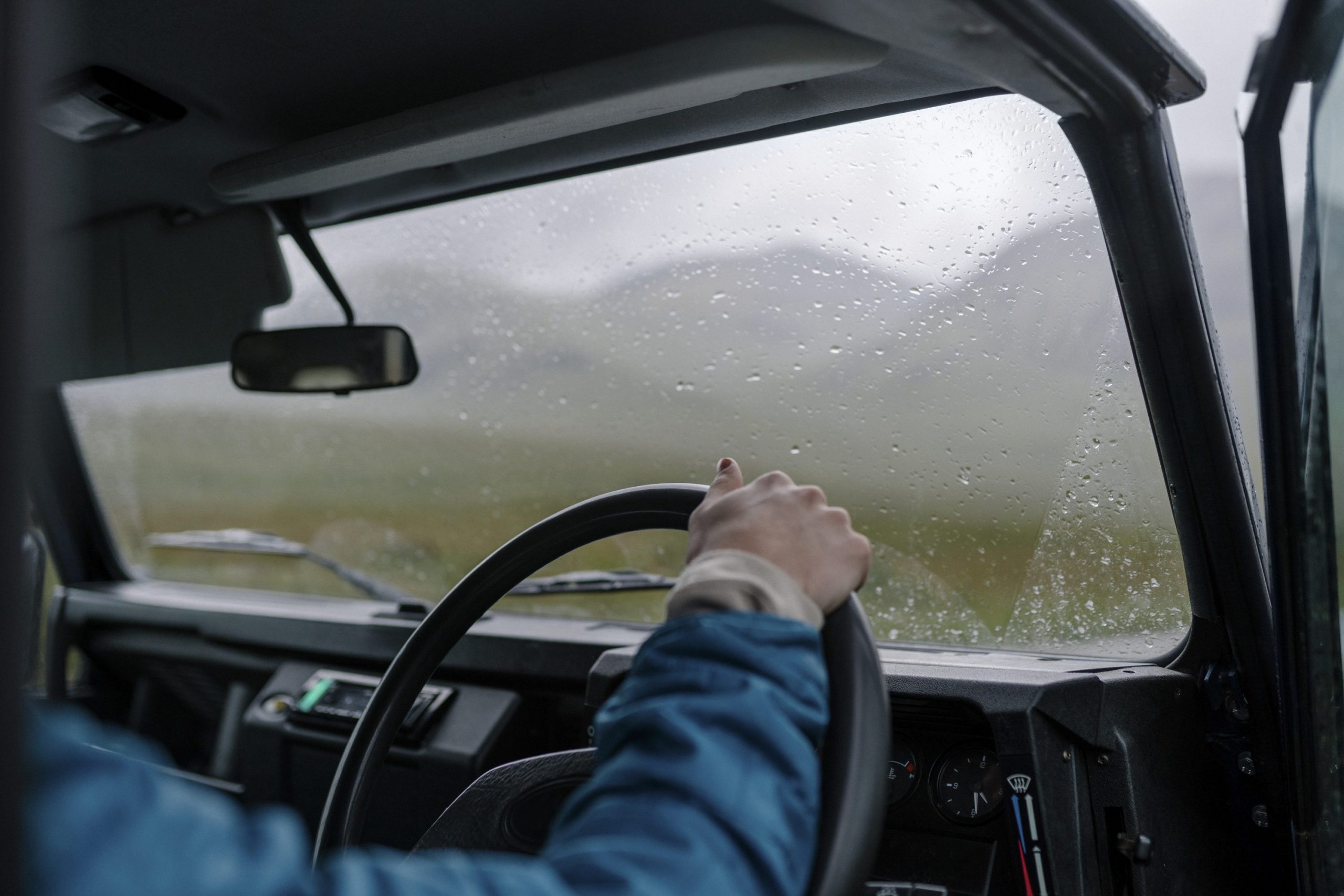
During wet weather, the grip of your tyres on the road is reduced and your perception can also be dramatically reduced as it is harder to see other vehicles, road signs, pedestrians and the road itself.
- Check your tyres – ensure the tread depth (at least 1.5mm deep across the whole tyre width) and air pressure is adequate
- Avoid driving with your cruise control on. If you do this and hydroplane, your wheels can reach an excessive speed when not in contact with the road
- Turn your headlights on low beam, high beam headlights are likely to reflect back
- Avoid unsealed roads which are more likely to have hidden potholes, water cover and sticky mud
- Avoid sudden movements; apply gentle pressure to your accelerator to avoid skidding
- Slow down and increase your stopping distance. In wet weather, you should double the distance between you and the car in front
- If you can’t see the road or car in front, pull over safely and wait until the rain eases
If you must travel in adverse conditions, keep in mind that safe driving behaviour is the number one control to avoid driving related incidents.
To find out more about how to help make your sites safer, speak to your Account Manager or contact us to hear more.