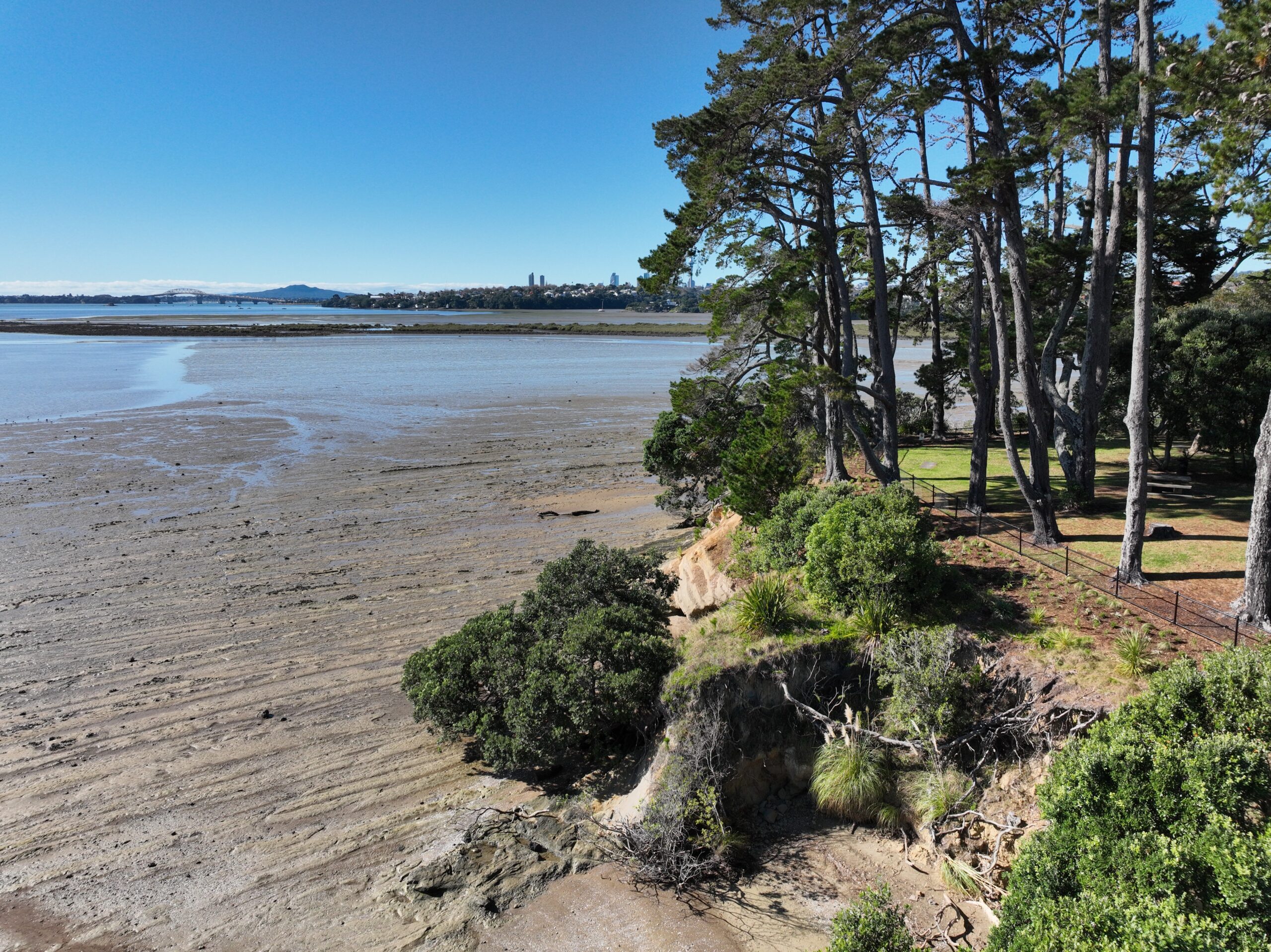
Strong communities rely on safe and well maintained public spaces. Following the severe damage caused by Cyclone Gabrielle, a coastal park in Auckland required urgent works to restore safety and support long term environmental resilience.
Programmed was engaged to deliver a $350k project involving the removal and replacement of approximately 600 metres of coastal fencing, along with enabling works to support future ecological regeneration. The damaged fence line had left the park unsafe for visitors and exposed vulnerable coastal edges to further erosion.
From the outset, delivery was guided by a design and consented framework developed prior to Programmed’s appointment. This included input from reNature and Auckland Council’s Landscape team, alongside extensive multidisciplinary collaboration involving geotechnical, planning, landscape, operational, project, and arboriculture specialists, as well as external engineers, arborists, archaeologists, and Mana Whenua. The works were delivered in accordance with Heritage Authority requirements, resource consent conditions, and Tree Owner approvals.
Programmed’s role was limited to the implementation of the approved design and consented methodology.
Phase 1 focused on the safe removal of damaged fencing and the installation of a new coastal fence line in accordance with the approved design. This stage was completed and successfully handed over to Auckland Council on 9 April 2026.
The project reflects the strength of collaboration across all parties involved in the planning and delivery process. The approved design also allows for more than 1200 square metres of future regeneration planting, supporting long term coastal stability and ecological recovery in areas where the fence line has been set back from the cliff edge.
Sustainability is a key outcome of the broader project vision. The integration of native planting and careful land management supports erosion control and biodiversity outcomes, helping to ensure the park remains a valued community space for future generations.
The project also required careful management of sensitive heritage contexts, including areas near a former army base, an influenza quarantine site, and midden associated with early indigenous occupation. Archaeological oversight was maintained throughout delivery to ensure works were undertaken in accordance with all approvals and cultural heritage requirements.
A ground screw fencing system was utilised as part of the approved design solution in identified sensitive areas. This approach reduced the need for excavation near protected trees and culturally significant locations, while still achieving a durable and fit-for-purpose outcome.
At its core, the project highlights the importance of skilled delivery teams working within a carefully developed, multi-party design framework. Programmed’s teams brought practical expertise, coordination and accountability to ensure the works were delivered safely, efficiently, and in line with all approved requirements.
As the project moves into its next phase, focus shifts to the planned planting and regeneration works, which will further enhance landscape resilience and ecological recovery across the site.
Through structured planning, strong partnerships and a shared commitment to safety, sustainability and environmental care, the project demonstrates how infrastructure can be delivered to support long term community outcomes.